Showing posts with label tips. Show all posts

Thursday, September 25, 2014

Safety First - Learn About Archival Safety

One thing that is sometimes overlooked when people are buying binders and sheet protectors is archival safety. As much as binder and sheet protectors are used for organizing, they also serve as great tools for people to archive and store memorable or important documents for a long period of time. A part from binders and sheet protectors, other environmental factors also contribute to archival safety.

Let’s look at sheet protectors first. In terms of archival safety this refers to the ability the sheet protector can effectively protect whatever it is that you are storing inside, whether it’s documents or photographs. This might sound very simple and on a general level, you may assume all sheet protectors should be able to do just that. However, on a more technical level, you will find out that in fact not all sheet protectors are archival safe. In order to be actually archival safe, sheet protectors should be chemically-stable with a neutral or slightly basic pH level. In science, pH levels refer to how acidic or basic something is. So with a neutral or slight basic pH level, that means sheet protectors should be ‘acid free’. This is important because being ‘acid free’ means your documents won’t be damaged by any erosion that may happen to the sheet protector over long periods of time.

Having said that, now you might be asking the question “With all the sheet protectors out on the market, how do I really know if they are acid free or not?” The answer to that question is - materials. There are several types of materials that are used to make sheet protectors:
  1. Polyvinyl chloride (PVC) 
  2. Polyethylene (PE) 
  3. Polyester (Mylar) 
  4. Polypropylene (PP) 
Of the four materials, you should avoid PVC as it is considered to be non-archival safe while the other three are archival safe and each has their pros and cons.

So Why Not PVC? 

The reason why PVC is considered non-archival safe is because it contains plasticizers. Plasticizer is a substance that is added to PVC during production to increase its flexibility and durability. There are over 300 different kinds of plasticizers - 50-100 are used commercially. These plasticizers will emit damaging hydrochloric acids as it deteriorates, therefore ruining both the sheet protector and the document inside. If you place photographs or other important documents into PVC sheet protectors, overtime you might notice damages like colors or ink from the photo and documents sticking to the sheet protector. This is a disastrous scenario as it is almost impossible to restore a photo with its color faded or ruined by acids emitted from the plasticizers used in PVC sheet protectors. Remember, PVC sheet protectors are NON-ARCHIVAL SAFE and should be avoided at all times.

The two images below shows exactly how PVC sheet protectors can cause irreversible damage.  As you can see from the image on the right, the red ink on the paper had faded. On the left you see the PVC sheet protector with the red ink marks from the document. What happened is basically the paper got stuck to the sheet protector and when you try to take the paper out, the ink is 'pulled' from the paper onto the sheet protector.  This can be a disastrous situation if you have precious memorable photos placed in PVC sheet protectors and over time they can be ruined just like this document.   

 - PVC sheet protector and document ruined

On another note, PVC is also used to make things like toys, clothing and other daily applications. There have been reports that show some plasticizers have a high level of toxicity in them and may even be a cause for cancer, therefore raising considerable amount of health concerns. Some countries even ban the use of PVC. While it seems like the plasticizers used in PVC for sheet protectors are not as dangerous, it is still something to keep in mind.

So What is Archival Safe? 

As mentioned early, of the four types of materials, only polyethylene (PE), polyester (Mylar), and polypropylene (PP) are archival safe. The reason is because they do not contain plasticizers and in general have a neutral or slightly basic pH level. This means they are acid free and is important because remember, acids will cause damage to paper causing them to turn yellow and become brittle and fragile.

So now you might be wondering, if all three materials are archival safe then which one should you use? The answer to that is it depends on what you need the sheet protectors for.

Polyethylene sheet protectors are the cheapest of all three. However, the quality of the sheet protectors is not that great. They usually are softer, less durable, and their finish is not as clear so it makes it hard to read the document that is inside. If you’re in need of cheap sheet protectors just to store regular paper and don’t mind poor quality then polyethylene is your kind of sheet protector.

Polyester, or Mylar, on the other hand is the most expensive kind of all three.  In fact, it's so expensive to manufacture, only a hand full of companies actual offer polyester sheet protectors.  Being so expensive, of course you should expect to get high quality sheet protectors that are durable, have a great feel and texture to it, and are crystal clear so it makes it very easy to view the contents inside. These are the sheet protectors you get if you want to protect and showcase your artworks, and of course if you have the money to spend.

The last type, polypropylene, is probably the most ideal sheet protector type. They are economical and comes in good quality –durable, clear and of course, again, archival safe. They are the most common type of sheet protectors used today and note that all Keepfiling sheet protectors are made from polypropylene.

Keepfiling is not only about organizing but also about protecting your documents and offers the best archival safe documents.  Check out our sheet protector buying guide and our archival safety page to learn more about sheet protectors and become an expert yourself!

Friday, May 09, 2014

NEW Binder Label Templates - Free

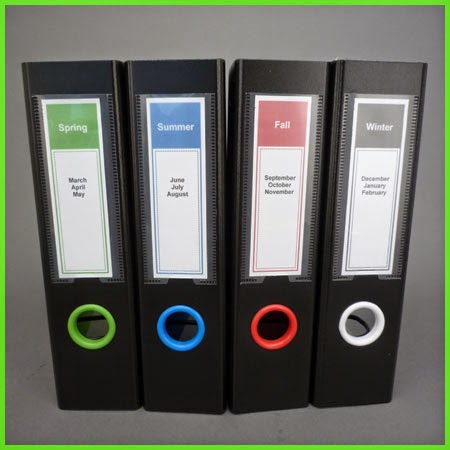
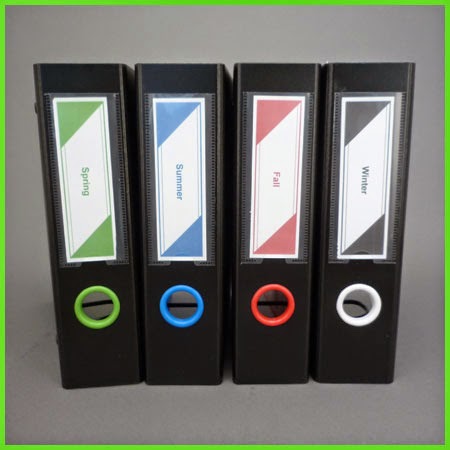
Labeling your binder is an important part of being organized.  It tells you what you're storing in your binders and also makes it easier for identifying them when they are on shelves.  Well made binders today will have some sort of pocket on the spine so you can put a label into, and that is exactly what Keepfiling binders feature. 

Keepfiling spine labels
We like to call it the Easy-to-Remove Spine Label.

The labels you put in can be a simple piece of paper with text, or if you wish to put in some design you can as well and that is what we're offering to our customers with these new label templates.
Apart from having text on the label so that you know what's inside, having nice labels also makes the binders look ascetically better when they are lined up on your shelves. We've come up several designs that matches our binders and uses the same color design.

The labels will fit into any of our Keepfiling binders and will for sure add a bit of excitement to the binders when you put the labels to use.

Visit Keepfiling's new Templates page, and choose your favorite spine label now!

Keepfiling Solid Color Design Spine Label
Keepfiling Professional Design Spine Label
Keepfiling Box Design Spine Label
Keepfiling Triangle Design Spine Label
Solid Color
Design
Professional
Design
Box
Design
Triangle
Design


You can download all these templates for at no cost. They are FREE.  Follow these simple instructions and you'll have your labels in less than 5 minutes!

  1. Pick a template and visit the template's page to download the file. 
  2. Open the template file with Microsoft Word.
  3. Edit the text for each label.
  4. Print out the label.
  5. Cut the labels along the OUTER BLACK DOTTED LINES.
If you wish to be creative, you can even download the template file and make changes yourselves and create your own label from these templates.  The templates are editable so you can change the colors or add new patterns to them if you wish.  Nothing beats having a binder with a DIY label that only you have because it's your own design!
 
You can now also search for templates on our website.  Simply do a search for 'templates' in our search bar and all downloadable templates will come up as your search results.


Note: This is NOT a search bar. Image for reference only.

Friday, April 18, 2014

Why Use Sheet Protectors ?

We always talk about how durable our sheet protectors are and how it will protect your documents, but we've never actually showed you how they actually perform.  Well have a look below at our latest video demonstrating exactly how durable our sheet protectors are!


They are made from strong polypropylene material and are not easy to break as you can see in the video when we try to split the edge with a finger.  Next we open the sheet protector and attempt to punch through it from within inside - no damage done. 

In the second part of the video we highlight the fact that our sheet protectors are pre-punched with holes to fit ring binders.  There was a time when sheet protectors weren't pre-punched and you actually had to punch holes through the sheet protector and your paper in order for it to go into binders.Pre-punched sheet protectors are great because it helps avoid the problem you see in the video when you might create a mess with all the small punched put paper pieces.

In this particular video we used a heavyweight letter size sheet protector punched for 3 ring binders.  For some models we offer multi-punched holes to fit different ring binders like 2, 3, 4 and 5 rings.  

The third part of the video shows that the pre-punched holes are very strong and won't rip as easily as some other brands of sheet protectors.  This is important because the stronger the holes, the more durable the sheet protectors are when it comes to turning pages.  Sheet protectors with holes that break easily will often rip apart when you flip through them in a binder.  With strong holes, it ensures that when you turn your pages the holes won't rip and you pages will stay intact.  The holes are so strong on our sheet protectors that a single sheet can withhold the weight of the entire binder filled with pages.

In the final part we demonstrate the utmost importance of sheet protectors - protecting your documents.  Whether you're at home or in the office, there is always the chance of accidentally spilling water, or even worse coffee, onto your work table with all your documents on them.  If you're not using sheet protectors then when you spill coffee, your document is basically ruined with coffee stains.  With sheet protectors, even when you spill coffee your document is safe and won't be stained.  As you can see, the sheet protector is easy to clean as well and any spills won't damage it in any way.

Keeping your papers safe and clean is the number one priority for sheet protectors but we also pay attention to the details and the small things to make sure that they are of great quality and can be used for a long time. 

Wednesday, March 19, 2014

The Guide for Scrapbook Newbies - Part 3: Page Protector Types

Tip 3 of our scrapbook guide points to the importance of using the right page protectors, and there are several keys you need to keep in mind:
  1. Material type
  2. Page protector finish
  3. Top-loading or side-loading
Material Type
There are three types of materials that page protectors can be made from: Polyester or Mylar, Polypropylene, and Polyethylene.

Polyester or Mylar are the best materials to protect your photographs and artwork.  However, they are also the most expensive material to make page protectors from.  You're looking at around $1.50/page, and they are usually sold in packs of 10. 

Polypropylene is probably the most ideal type of page protector material, and is commonly used amongst scrapbook enthusiasts.  They are durable and reasonably priced.  Standard weight Polypropylene page protectors will work like a charm and if you want something even more durable, some brands offer them in heavyweight and super heavyweight polypropylene.  Keepfiling's scrapbook page protectors are all made from polypropylene. 

Polyethylene page protectors are the cheapest of the three.  They do just as good of a job when you need to organize your scrapbook contents.  However, the overall finish of the page protector is sometimes not as clean compared to polypropylene. 

Page Protector Finish
Although most scrapbookers will choose the clear page protectors because it obviously makes it much easier to see the contents, someone people do like to choose the non-glare because of it's subtle and subdue look.  This is merely a choice of preference but it's good to know that these options are available.  Visit our website for more information on clear versus non-glare.

Top-loading or Side-Loading
Again, this is really a choice of preference whether you like to load your pages from the side or from the top.  One advantage side-loading page protectors might have is that it will probably do a better job at preventing dusts from going into your pages as you keep your scrapbooks on shelves.

A Few General Rules:
  • Always look for acid free page protectors as this helps to protect your contents. 
  • STAY AWAY from magnetic, and vinyl page protectors (even if they are labelled acid free).  These page protectors will almost always destroy your photos and that is not what you need.  
Scrapbooking has changed tremendously over the years.  It started out as a simple pastime activity for moms, and has now turned into an art form that some people might even feel intimidated or overwhelmed to get into. If you are new to scrapbooking, we hope this quick guide put you into the right direction, or if you are an expert already we hope this reminds you some of the basics to scrapbooking.  There are tons of other sources online to learn about scrapbooking and as it is now an art form, there is no right or wrong to what you can do - so just be opened minded to what others have done and put them together with your own ideas!
Get Keepfiling Scrapbook Page Protectors online

Be sure to check out some of the page protectors we have available for scrapbooking on Keepfiling.

Wednesday, March 05, 2014

The Guide for Scrapbook Newbies - Part 1

By definition, a scrapbook is basically 'a book with blank pages to which you attach photographs, letters, newspaper stories, etc., that help you remember a person or time'.

People make scrapbooks for all sorts of reasons, whether it’s because they simply enjoy making them or because they wish to highlight and preserve moments in their lives that are happy or are proud of. To avid scrapbookers, scrapbooking is an art that requires a great deal of time and attention to details. On the other hand, to the average person, scrapbooking might just be a simple collection of photos in an album.

Keepfiling Scrapbook collection

Regardless of whether you are an enthusiast or a first timer, there are a few general tips to help get you started. Of course if you’re an enthusiast you might already know these tips but it doesn’t hurt to go over them again right? For those newbies who wish to make their first scrapbook, these tips will help guide you through a few simple steps in order for you to make your first scrapbook.

Tip 1: Find the right size

Picking the right size to work with is tied to what you’re making the scrapbook for. As it is with anything you do, it is very important to know what the purpose is for what you're doing. Knowing what sort of documents you want to preserve or keep in your scrapbook will help determine what size of the book you should be working with. If it’s a simple scrapbook to preserve photos, maybe you just need a small 8x10 scrapbook. If you’re making a scrapbook for genealogy purposes, you might want to go with the 17x11 since that is the common since for genealogy documents.

If you are not sure of what size to use or if your scrapbook is going to have multiple sized items, then you may choose to use the typical 12 x 12 size. Most scrapbooks today are in the 12 x 12 size which is a nice square format to work with and you can easily get binders and sheet protectors of that size at any stationary store. However, there is no written rule that you must use a 12 x 12, as there are other various sizes like the larger 17 x 11 or 14 x 17, or smaller sizes like 8 x10, that are also great to work with. These sizes are typically harder to find, but of course we have them at Keepfiling – both binders and sheet protectors. You can visit our Scrapbook and Artwork Page to see which page protector sizes we carry ideal for scrapbooks.

Remember, when you are planning your scrapbook, the first important step is to have a clear idea of what it's going to be for as it will play a big part in helping you decide which size you will want to work with.

Stay tuned for Part 2 of our guide which will reveal our next tip!